Sound Stage Rental: What’s Included? | AKS Stages
July 11, 2026
Average Sound Stage: How Big Is It? | AKS Stages
July 11, 2026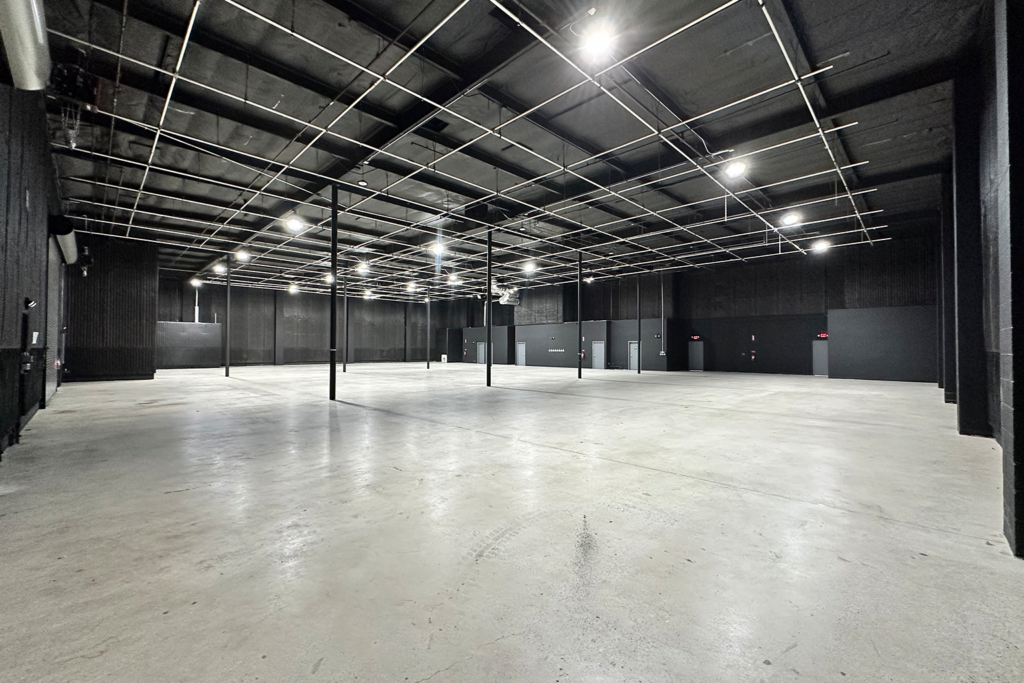
How Much Does It Cost to Rent a Sound Stage?
The sound stage rental cost in Los Angeles can start around $1,000 and rise to several thousand dollars per day. The final price depends on the stage size, crew size, parking requirements, equipment needs, support spaces, and total working hours.
At AKS Stages in Burbank, the sound stage rental cost generally ranges from approximately $1,000 to $4,000 per day. Our smallest stage falls near the lower end, while larger stages cost more because they can accommodate bigger crews, larger sets, and more complex productions.
However, the daily stage rate represents only one part of the production budget.
After operating sound stages and working directly with productions for many years, we have found that the biggest cost problems usually come from expenses that the production did not discuss or plan for in advance.
Quick answer: Productions should budget approximately $1,000 to $4,000 per day for the stage itself at AKS. They should also plan for possible parking, equipment, overtime, trash removal, prep, strike, and additional support costs.
These figures are planning estimates rather than guaranteed public rates. Each production receives a quote based on its actual needs.
What Determines Sound Stage Rental Cost?
Stage size is one of the most obvious pricing factors. However, productions should not choose a stage based only on square footage.
The right stage depends on how the production plans to use the space.
A smaller production with a limited crew and one simple setup may work efficiently on a smaller stage. By contrast, a production with more than 80 crew members may need a significantly larger facility, even when the physical set does not initially appear especially large.
The sound stage rental cost may increase when:
- The production needs a larger shooting floor
- The production is building a large set
- Several sets will remain standing at the same time
- Multiple camera setups will operate simultaneously
- The crew needs substantial lighting or grip equipment
- The production needs additional offices or support rooms
- The shoot requires more parking
- The schedule includes prep, strike, or overtime
Trying to place a large production into a stage that is too small may reduce the initial rental rate. Nevertheless, it can increase labor costs, slow down the crew, and create overtime.
Therefore, productions should compare the total cost of operating in the space rather than choosing the lowest advertised stage price.
Typical Sound Stage Rental Costs at AKS
At AKS Stages, our daily rates generally fall between approximately $1,000 and $4,000.
The lower end applies to smaller stages and simpler productions. Meanwhile, the higher end generally applies to productions that need one of our larger stages because of crew size, set size, equipment, or multiple setups.
AKS currently offers four different stage sizes:
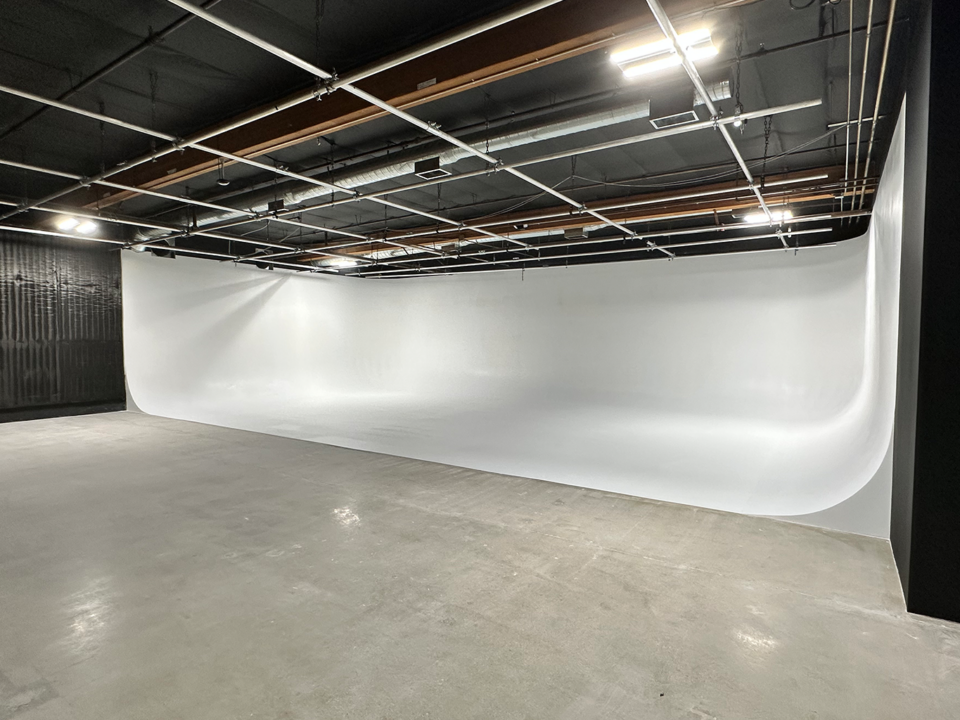
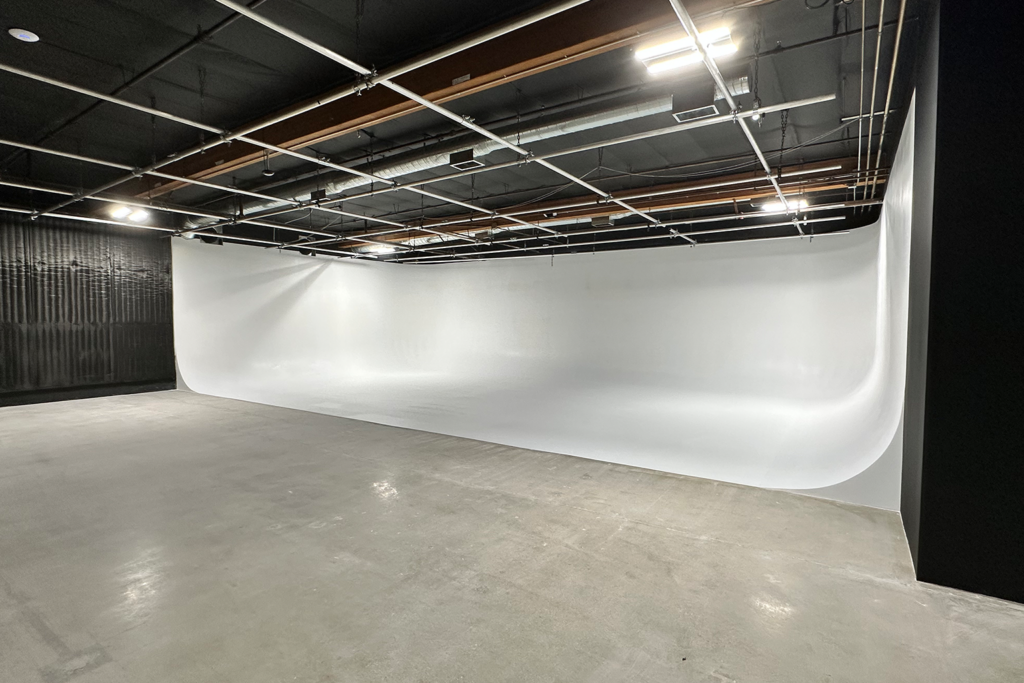
- Stage 4: 1,160-square-foot stage floor
- Stage 3: 4,850-square-foot stage floor
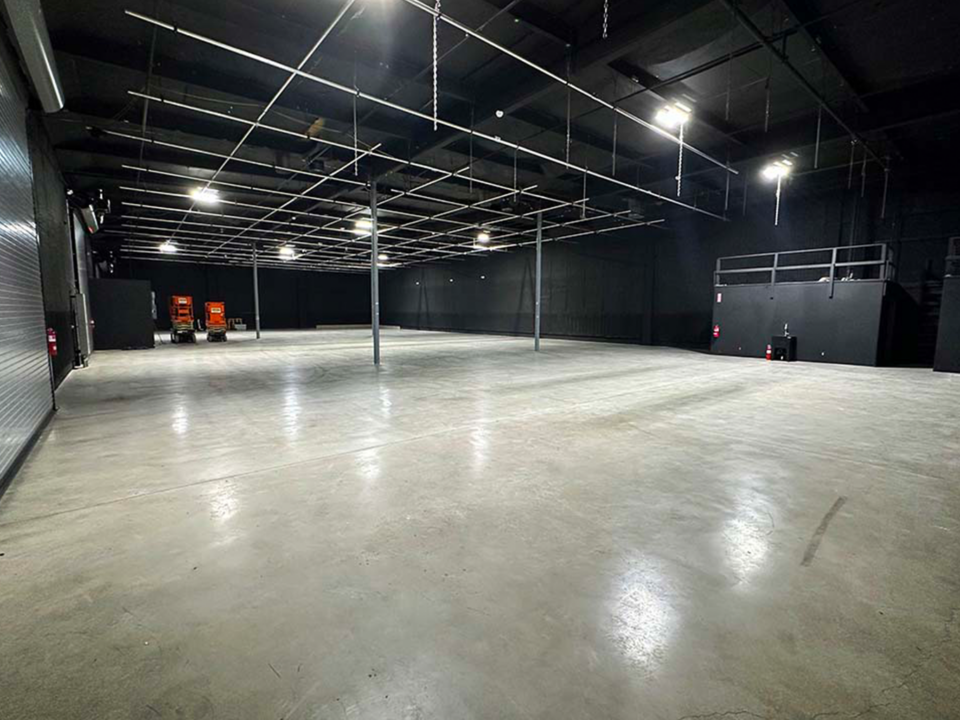
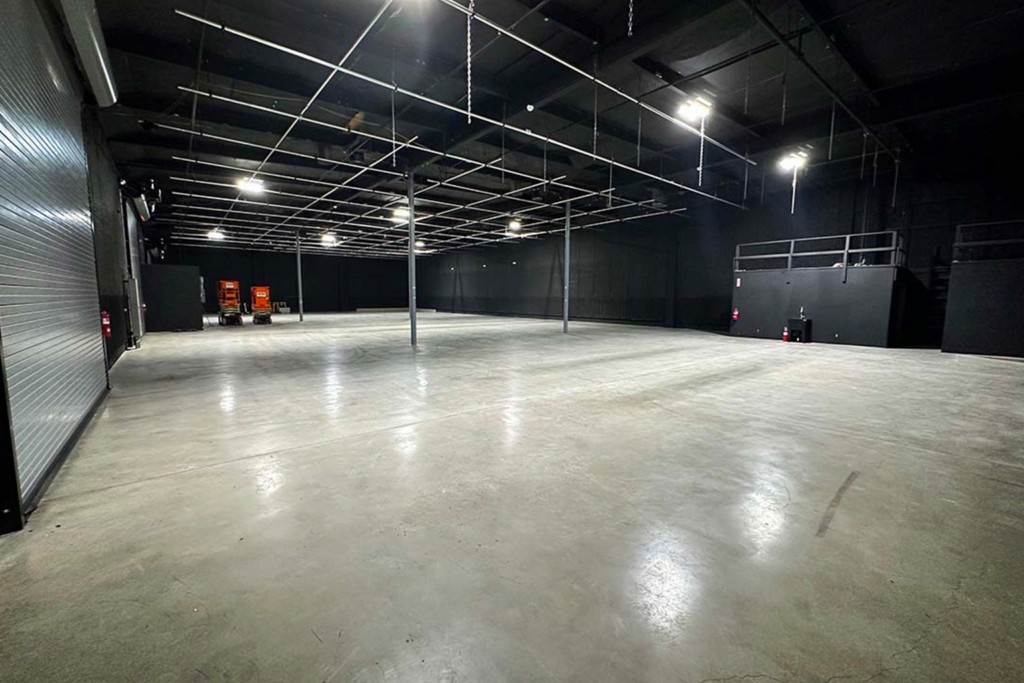
- Stage 1: 10,000-square-foot stage floor
- Stage 2: 13,000-square-foot stage floor
These prices should be treated as a starting point rather than the production’s complete facility budget.
Two productions can rent the same stage and still have very different total costs. For example, one production may bring a small crew, complete one setup, and finish within 12 hours. Another production may require extensive parking, large equipment packages, several sets, construction debris, and overtime.
Hidden Costs That Affect Sound Stage Rental Cost
One of the biggest mistakes we see is budgeting only for the shooting floor.
The following costs can materially change the final production budget:
- Additional parking
- Grip and lighting equipment
- Scissor lifts
- External generators
- Overtime
- Prep and strike days
- Trash removal
- Set demolition and disposal
- Additional labor
- Security or special access requirements
Productions should discuss these items before accepting a quote. When the stage understands the complete production plan, it can provide a more realistic estimate.
Parking and Sound Stage Rental Cost
Parking is one of the most common unexpected production expenses.
A production may originally estimate a small crew and then add crew members, vendors, talent, clients, or equipment vehicles. Once that happens, the production may suddenly need more parking than the stage property can provide.
Last-minute off-site parking can cost significantly more than parking arranged in advance.
It may also require:
- Shuttle vehicles
- Parking attendants
- Security
- Traffic coordination
- Transportation between the lot and the stage
The best way to control this cost is to provide an honest crew size and vehicle count during the initial conversation.
The vehicle estimate should include:
- Crew vehicles
- Cast vehicles
- Client and agency vehicles
- Equipment trucks
- Production vans
- Hair and makeup vehicles
- Wardrobe vehicles
- Catering vehicles
- Delivery vehicles
When we know the actual parking requirement early, we can help the production identify the most cost-effective option.
AKS also has access to additional production parking through Burbank Lot Rentals. However, productions should confirm availability before the shoot.
Trash Removal and Set Disposal Costs
Trash removal is another frequently overlooked expense.
A production may arrive with lumber, flats, props, expendables, packaging, food-service materials, and other supplies. At the end of the shoot, the production must remove much of that material.
The problem becomes more significant when the production has constructed a set.
Tearing down a set can generate far more debris than expected. If the production did not plan disposal in advance, it may need to arrange a dumpster, additional hauling, labor, or special disposal at the last minute.
Productions should decide before the shoot:
- Who will strike the set
- Which materials the crew will discard
- How much debris the production expects
- Who will order a dumpster
- When the dumpster will arrive
- Who will pay for hauling and disposal
- Who will leave the stage clean
AKS has a shared dumpster for small amounts of normal production trash. However, the shared dumpster cannot accommodate the demolition of an entire constructed set.
Planning waste removal before load-in almost always costs less than solving the problem during wrap.
How Equipment Changes Sound Stage Rental Costs
The basic stage rate does not automatically include every piece of production equipment.
Productions may need to budget separately for:
- Lighting equipment
- Grip equipment
- Cable and electrical distribution
- Scissor lifts
- Communication systems
- External generators
- Equipment delivery and pickup
- Qualified operators or technicians
A larger stage may require more lighting, cable, distribution equipment, lifts, and labor than a smaller space.
However, this does not mean the larger stage is the wrong choice. Instead, it means the production should match its equipment budget to the size of the stage and the shooting plan.
A low sound stage rental cost does not necessarily produce a low total budget when the space is poorly suited to the shoot.
Before booking, the gaffer or another qualified member of the production team should review the electrical specifications for the selected stage. Current specifications and floor plans are available on the AKS downloads page.
How Overtime Affects Sound Stage Rental Cost
In our experience, the most cost-effective productions complete their work within the scheduled 12-hour day.
This applies whether the production is filming a commercial, television show, music video, photo shoot, interview, or independent project.
Once a production enters overtime, several costs may increase at the same time:
- The stage
- The production crew
- Cast
- Equipment rentals
- Vendors
- Transportation
- Security
- Parking or shuttle services
A production that begins without a realistic schedule can spend more on overtime than it saved by negotiating a lower stage rate.
Therefore, good planning often provides more value than finding the cheapest possible facility.
Prep Days, Shoot Days, and Strike Days
Productions should not budget only for the day that the cameras roll.
A larger project may also need:
- Set-construction days
- Lighting and pre-light days
- Equipment load-in
- Camera or lighting tests
- Rehearsals
- Shoot days
- Set strike
- Equipment load-out
- Final cleaning
When requesting a quote, provide the number of prep, shoot, and strike days separately.
The stage may price those days differently depending on how much of the facility the production uses and how many people will be working.
Is a Sound Stage Cheaper Than Shooting on Location?
In many cases, a properly permitted sound stage can cost less overall than shooting on location in Los Angeles.
A location fee may initially appear inexpensive. However, a location shoot can also require:
- Filming permits
- Street parking restrictions
- Traffic control
- Police or fire personnel
- Neighborhood coordination
- Portable power
- Restrooms
- Holding areas
- Weather protection
- Noise control
- Company moves
Street parking can become especially complicated and expensive. Depending on the location and the nature of the shoot, the production may need additional permits, parking restrictions, traffic control, or coordination with nearby businesses and residents.
These requirements vary by project and jurisdiction. Therefore, productions should confirm the current rules that apply to their specific shoot.
AKS Stages is a permitted production facility in Burbank. A controlled stage environment gives the production more control over sound, lighting, access, weather, security, scheduling, and working conditions.
That control can reduce delays and make the final sound stage rental cost more predictable than an uncontrolled location budget.
Why Honest Production Information Saves Money
The best advice we can give a first-time sound stage renter is simple: be honest about what the production actually needs.
Do not underestimate crew size to obtain a lower quote.
Do not leave out:
- Parking vehicles
- Set construction
- Equipment deliveries
- Catering vehicles
- Talent holding
- Client and agency attendance
- Additional shooting days
- Expected construction debris
A stage operator cannot help reduce costs without accurate information.
When clients tell us their complete requirements early, we can often identify a more efficient solution. That may mean selecting a different stage, arranging parking in advance, planning equipment more carefully, or changing how the production uses the available space.
When important details appear at the last minute, the production usually loses the ability to choose the least expensive option.
The Value of Working With a Smaller Sound Stage
AKS Stages is a smaller, independently operated sound stage facility.
For stages of our size, we believe our pricing is generally competitive with larger facilities. However, price is not the only difference.
Our owners work directly with clients. We know many of our regular productions, understand their needs, and remember how they prefer to work.
They are not simply a production name on a piece of paper.
That relationship can have real financial value when something unexpected happens.
For example, we have had productions experience a problem during the shoot and fail to complete their work within the scheduled day. Rather than automatically requiring another full-day rental, we have sometimes allowed them to return the following day and finish at a straightforward hourly rate.
We cannot offer that solution in every situation. It depends on availability, scheduling, and the specific circumstances.
However, it shows how a smaller independent stage can sometimes respond more flexibly than a large corporate facility.
Learn more about AKS Stages and our Burbank production facility.
How to Get an Accurate Sound Stage Rental Cost
To receive a useful quote, a production should provide:
- The requested dates
- The number of shoot days
- The number of prep and strike days
- The expected crew size
- The number of cast members
- The number of clients and visitors
- The approximate number of vehicles
- The size and type of set
- The number of setups
- The expected working hours
- The equipment being brought in
- The electrical requirements
- The expected amount of construction debris
- Any special loading, access, or security requirements
The more complete the information is, the more accurate the quote will be.
Productions should also ask what the rate includes. A low advertised price may exclude support rooms, utilities, parking, or other features that another stage includes.
The correct comparison is the estimated total production cost rather than the number printed next to “stage rental.”
Could Sound Stage Rental Prices Change?
Yes. Sound stage pricing can change based on operating costs, availability, demand, and the number of suitable stages available for a particular production.
However, productions should not attempt to predict the market when they have firm filming dates.
Instead, they should request a written quote that clearly identifies:
- The stage
- The rental dates
- The included hours
- The included support rooms
- The available power
- The included parking
- The overtime rate
- Any additional charges
Our goal at AKS Stages is to remain an affordable, professional alternative to larger stage operators while providing a permitted facility and direct personal service.
Final Answer: Sound Stage Rental Cost in Los Angeles
A realistic starting sound stage rental cost at AKS Stages is approximately $1,000 to $4,000 per day.
The final production budget may also include:
- Parking
- Equipment
- Overtime
- Trash removal
- Set construction and disposal
- Prep and strike time
- Additional labor
- Security or special access requirements
The most affordable stage is not always the stage with the lowest advertised rate.
Instead, choose a stage that fits the crew, set, equipment, parking, and schedule. A properly sized stage can help the production work faster, avoid overtime, and reduce last-minute expenses.
For an accurate AKS quote, send us your dates, crew size, set size, vehicle count, working hours, electrical requirements, and a brief description of the project.
Review AKS sound stage rental options
Explore AKS Stages
Los Angeles Soundstage Rentals
1. AKS Stage 1
2. AKS Stage 2
3. AKS Stage 3
4. AKS Stage 4
Production Offices and Support Spaces